


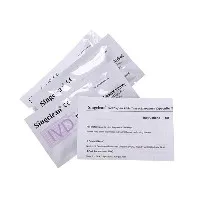


The LH surge, short for luteinizing hormone surge, is a critical biological event in a woman's menstrual cycle that plays a pivotal role in ovulation. As a supplier of LH Ovulation Tests, I've witnessed firsthand how understanding this phenomenon can empower women on their journey to fertility. In this blog, we'll delve into what the LH surge is, how it relates to ovulation, and how our Easy Ovulation Test, At Home Ovulation Test, and LH Diagnostic Kit can assist in tracking this crucial process.
Understanding the Menstrual Cycle
Before we dive into the LH surge, it's essential to have a basic understanding of the menstrual cycle. The menstrual cycle is a complex series of hormonal and physiological changes that occur in a woman's body approximately every 28 days, although this can vary from person to person. It can be divided into four main phases: the menstrual phase, the follicular phase, ovulation, and the luteal phase.
The menstrual phase marks the beginning of the cycle, during which the uterine lining is shed, resulting in menstrual bleeding. This phase typically lasts for 3 - 7 days. The follicular phase follows, during which follicles in the ovaries begin to develop under the influence of follicle - stimulating hormone (FSH). These follicles contain immature eggs.
What is the LH Surge?
As the follicular phase progresses, one follicle becomes dominant and continues to grow. When this dominant follicle reaches a certain size, the body experiences a significant increase in luteinizing hormone (LH) levels. This sudden and sharp rise in LH is known as the LH surge.
The LH surge is triggered by a complex interplay of hormones. As the dominant follicle grows, it produces increasing amounts of estrogen. High levels of estrogen then signal the hypothalamus and pituitary gland to release a large amount of LH. The LH surge typically lasts for about 24 - 48 hours.
How Does the LH Surge Relate to Ovulation?
The LH surge is the key trigger for ovulation. Once the LH surge occurs, it causes the dominant follicle to rupture, releasing a mature egg from the ovary into the fallopian tube. This process usually happens within 24 - 36 hours after the start of the LH surge.
Ovulation is a crucial event for fertility because it is the only time during the menstrual cycle when a woman can conceive. The released egg is viable for about 12 - 24 hours, while sperm can survive in the female reproductive tract for up to 5 days. Therefore, having intercourse in the days leading up to and during ovulation increases the chances of fertilization.
Tracking the LH Surge
Accurately tracking the LH surge is essential for women who are trying to conceive or who want to understand their fertility better. There are several methods available for tracking the LH surge, including basal body temperature (BBT) charting, cervical mucus monitoring, and using LH ovulation tests.
Basal body temperature charting involves taking your temperature every morning before getting out of bed. A slight increase in BBT (about 0.5 - 1 degree Fahrenheit) can indicate that ovulation has occurred. However, this method only confirms ovulation after it has already happened and may not be as precise in predicting the LH surge and ovulation.
Cervical mucus monitoring involves observing changes in the consistency and appearance of cervical mucus throughout the menstrual cycle. As ovulation approaches, cervical mucus becomes clear, slippery, and stretchy, similar to raw egg whites. While this method can give some indication of approaching ovulation, it can be subjective and may not be as reliable for all women.
LH ovulation tests are a more direct and convenient way to track the LH surge. These tests work by detecting the presence of LH in urine. When the test detects a high level of LH, it indicates that the LH surge is occurring, and ovulation is likely to happen soon.
Our LH Ovulation Tests
As a supplier of LH Ovulation Tests, we offer a range of high - quality products designed to accurately detect the LH surge. Our Easy Ovulation Test is user - friendly and provides clear results. It is suitable for women who are new to tracking their ovulation.
The At Home Ovulation Test allows women to conveniently test for the LH surge in the privacy of their own homes. It is a reliable and cost - effective option for regular monitoring of the menstrual cycle.
Our LH Diagnostic Kit is a comprehensive solution that provides multiple tests for more accurate tracking of the LH surge over several days. This kit is ideal for women who have irregular menstrual cycles or who want to increase their chances of accurately predicting ovulation.
Benefits of Using Our LH Ovulation Tests
One of the main benefits of using our LH ovulation tests is their high accuracy. Our tests are designed to detect even small increases in LH levels, ensuring that you don't miss the LH surge. They are also easy to use, with clear instructions provided.
Another advantage is the convenience. You can perform the tests at home at any time that is convenient for you, without having to visit a doctor or a clinic. This saves time and money, especially for women who need to test regularly.
Why Choose Our Products?
We take pride in offering high - quality LH ovulation tests that are backed by scientific research and rigorous quality control. Our products are manufactured using the latest technology and adhere to strict industry standards.
We also provide excellent customer support. Our team of experts is available to answer any questions you may have about using our tests, interpreting the results, or understanding your menstrual cycle.


Contact for Procurement
If you are interested in our LH ovulation tests, whether you are a distributor, a retailer, or an individual looking for a reliable ovulation testing solution, we would love to hear from you. We offer competitive pricing, flexible order quantities, and fast shipping. Contact us to start a procurement discussion and take the first step towards providing accurate ovulation testing solutions.
References
- Speroff L, Glass RH, Kase NG. Clinical Gynecologic Endocrinology and Infertility. Lippincott Williams & Wilkins; 2005.
- Balen AH, Tan SL. Management of ovulation disorders. Best Pract Res Clin Obstet Gynaecol. 2004;18(2):243 - 260.
- Practice Committee of the American Society for Reproductive Medicine. Evaluation and treatment of anovulation. Fertil Steril. 2013;99(1):34 - 43.